
Gold Hits Record Highs at Year-End: What Is Driving the Rally?

Daily Market Analysis
Expert analysis of today's market movements and trading opportunities
Daily Market Analysis
Expert analysis of today's market movements and trading opportunities
Fundamental Analysis
- Gold has reached the $4,500 level, showing signs of a temporary pause
- Geopolitical risks remain a key factor
- Growing concerns over possible U.S. intervention in Venezuela
The 2025 Climax
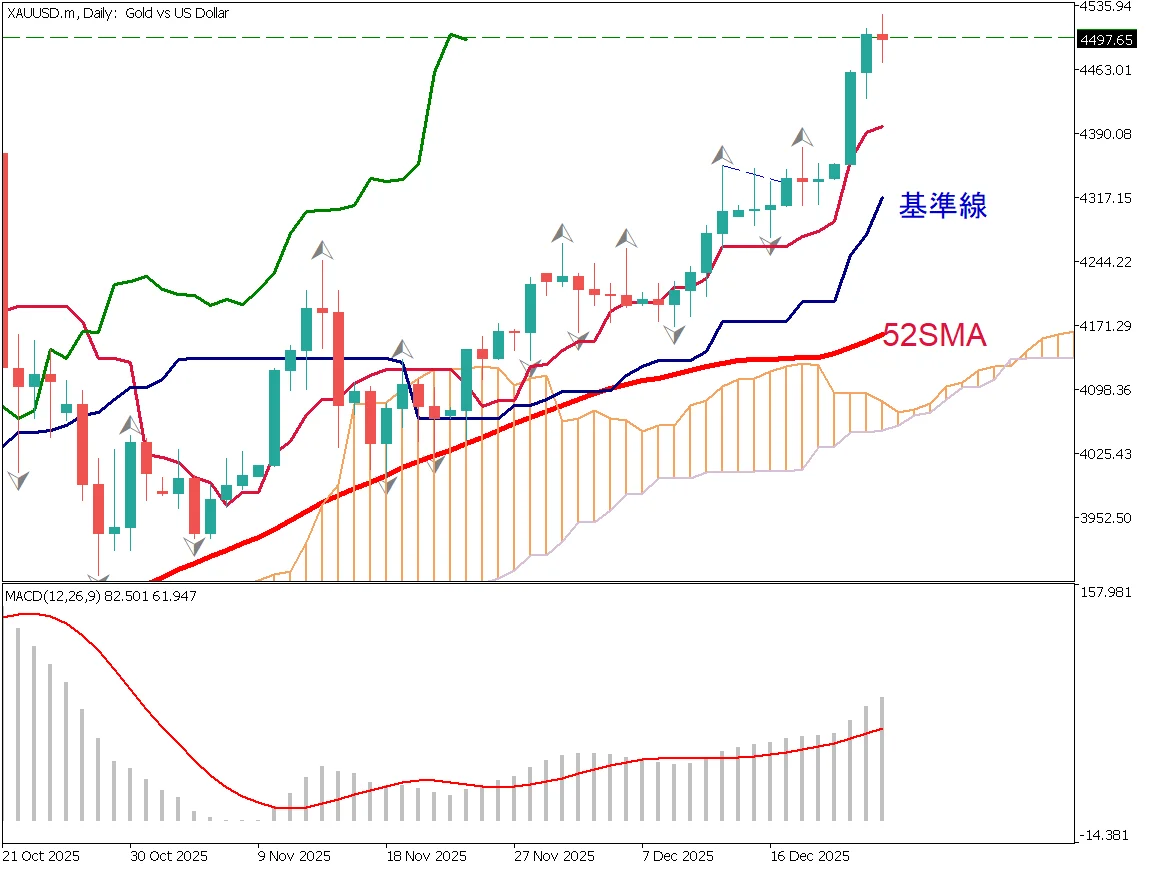
Gold surged sharply throughout 2025. About one year ago, prices were in the $2,600 range, but by the end of 2025 they nearly doubled to $4,500, representing a gain of approximately 73%. In yen terms, gold rose from around ¥410,000 to ¥700,000.
The main trigger was the start of the U.S. rate-cut cycle. In addition, multiple factors overlapped, including geopolitical tensions, broad U.S. dollar selling, and increased gold purchases by major countries. Currently, concerns over U.S. involvement in Venezuela are fueling geopolitical risk, pushing up oil prices and encouraging capital flows from the U.S. dollar into gold.
After reaching $4,500, some consolidation selling has appeared. A pullback toward the conversion line should be monitored. With fewer major economic indicators and the market entering a holiday mood, institutional investors are likely to stay on the sidelines. Market sentiment could change sharply as 2026 begins.
Day Trading Strategy
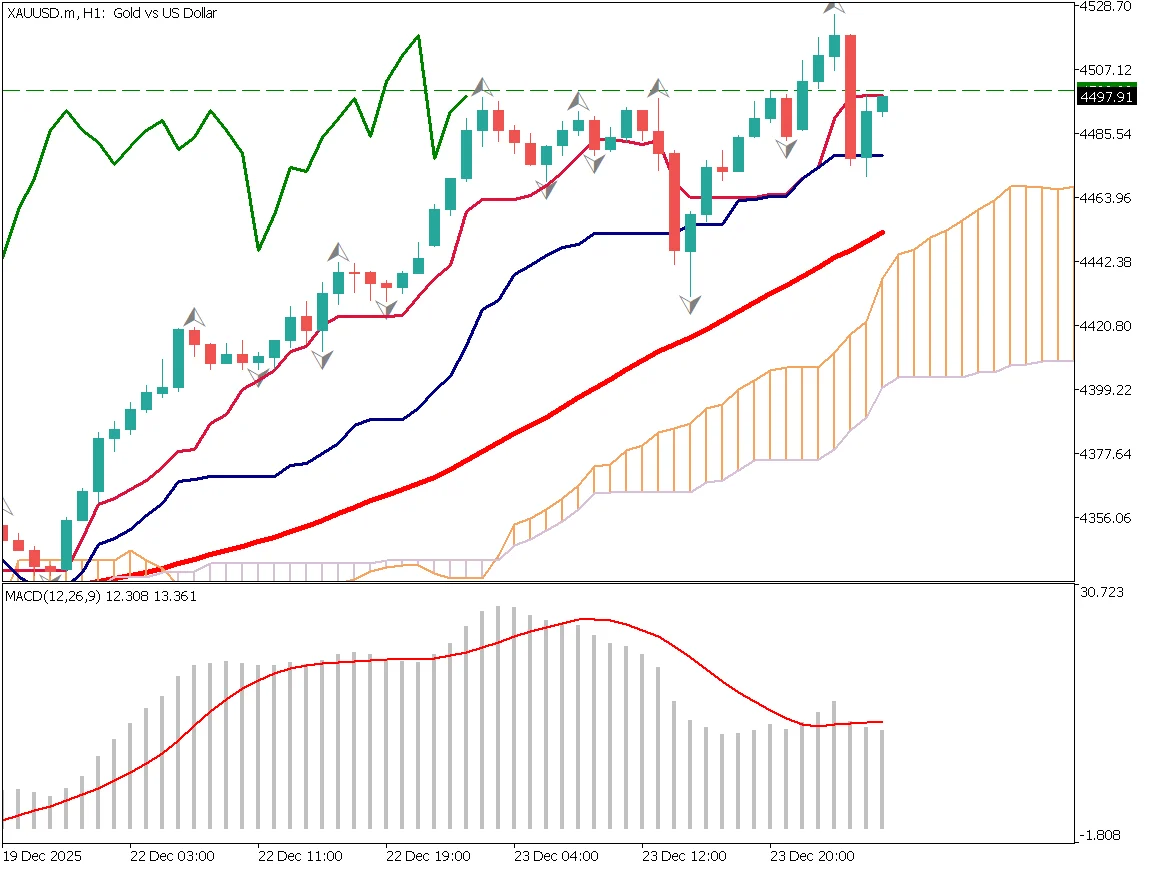
After reaching $4,500, a large bearish candlestick formed, with prices falling from around $4,520 to $4,485 due to profit-taking. Buying aggressively at this level may be difficult as trading volume declines during the Christmas and year-end holidays.
While the trend remains hard to judge unless prices break below the 52-day moving average, a corrective move toward the $4,420 area is possible.
Despite short-term caution during the year-end holiday period, the broader bullish outlook remains intact heading into the new year.
Today's Key Economic Events
| Event | Time |
|---|---|
| Bank of Japan Policy Meeting Minutes | 8:50 |
Ready to trade?
Open live accountRelated Analysis
Gold Rises Further as U.S. Rate Cuts Accelerate
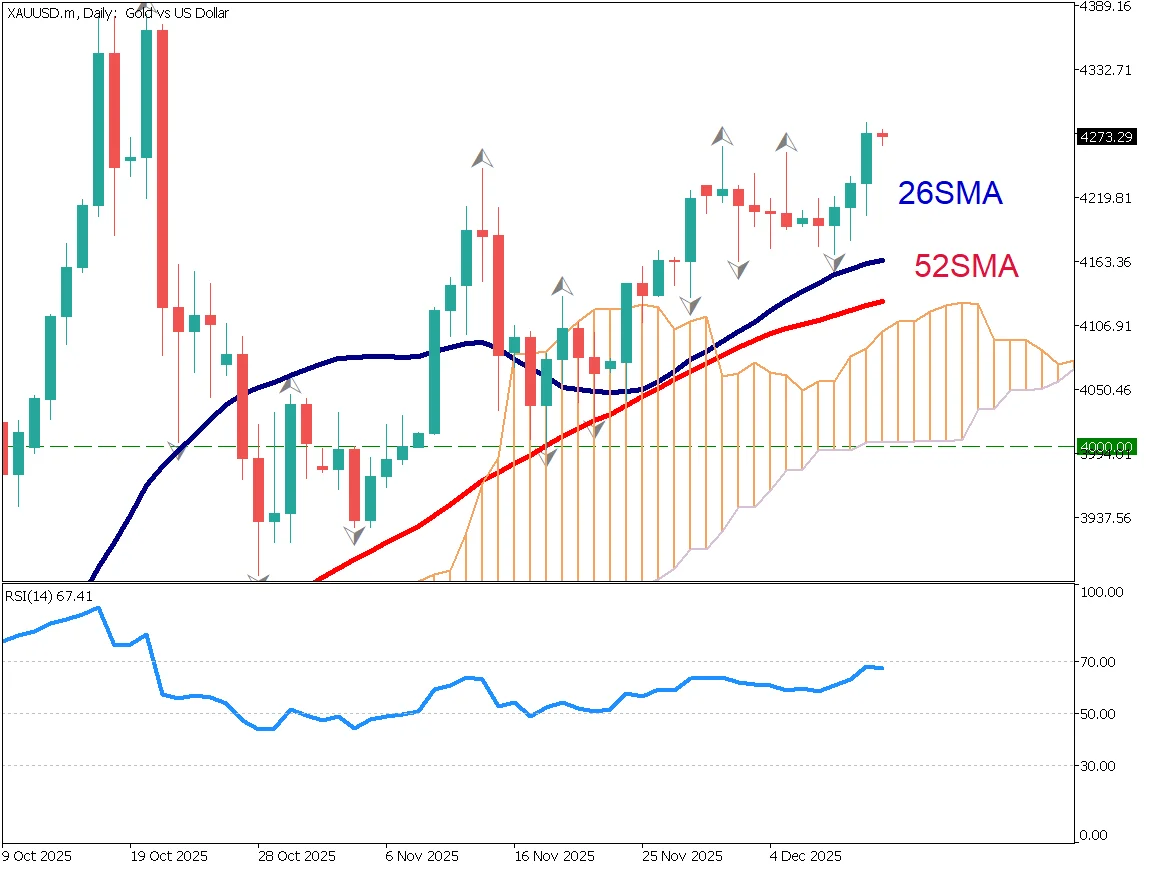
U.S. interest rate cuts continue to support gold prices. A rare "cup with handle" pattern has appeared on the gold chart, suggesting potential for further gains toward $4,400.
Can Gold Maintain the $4,000 Level?
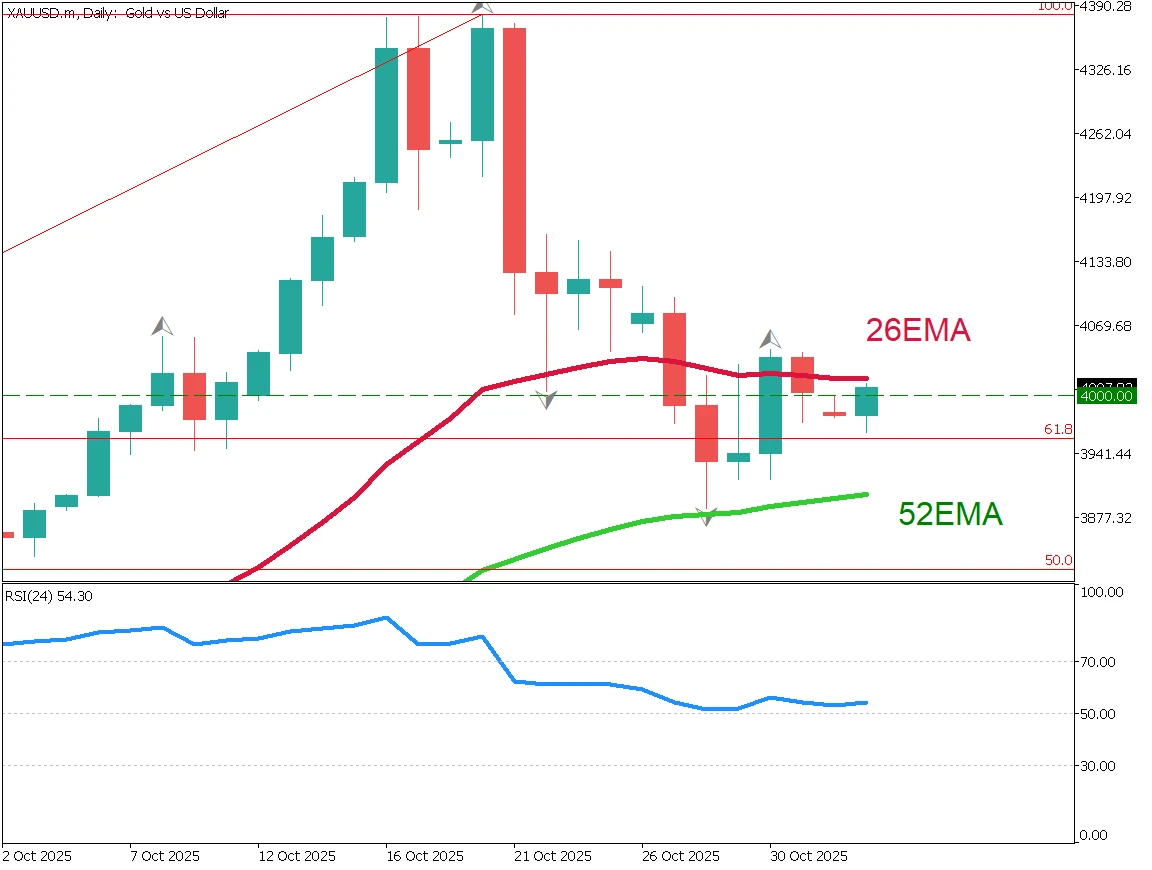
Federal Reserve Governor Waller advocated for a rate cut in December, citing a weakening labor market. In Japan, despite the holiday, the yen continues to weaken gradually.
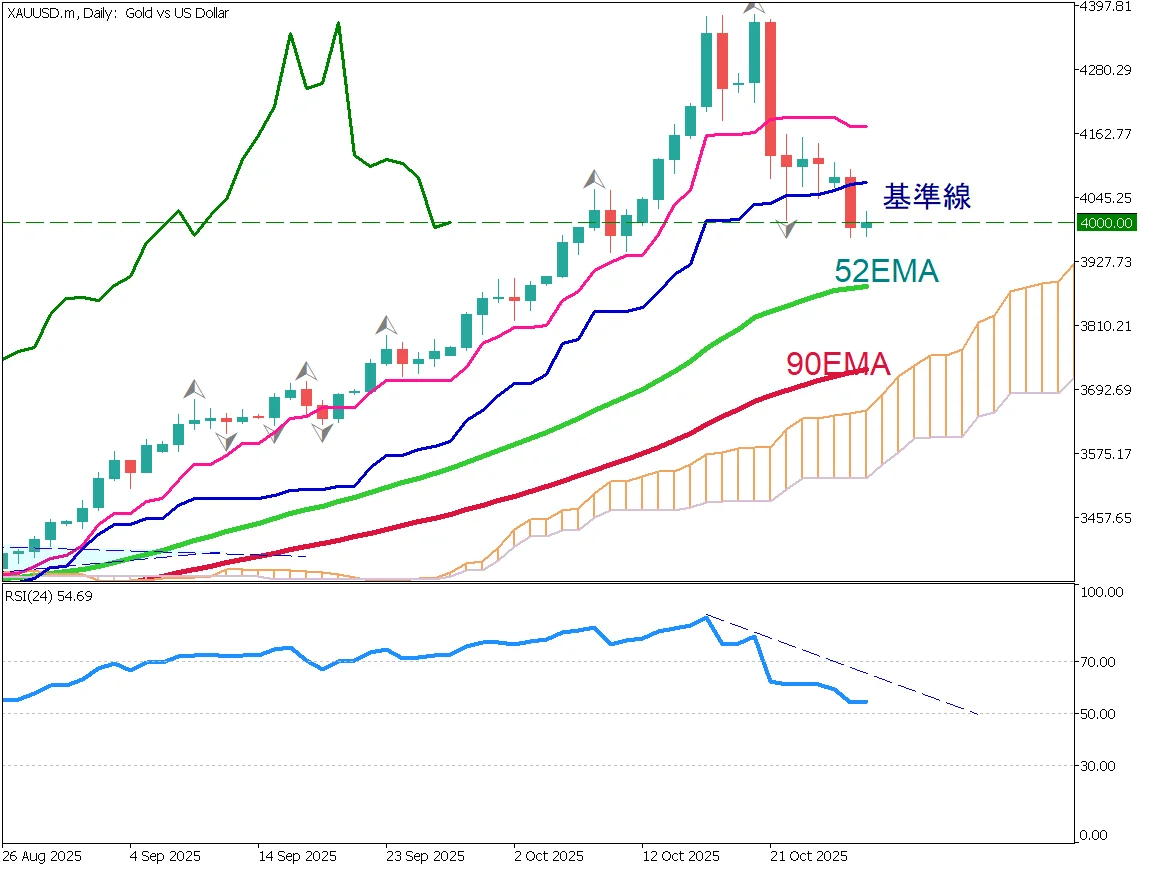
Gold Falls Below $4,000 as Risk-Off Sentiment Eases
Gold briefly fell below $4,000 as risk-off sentiment eased after the U.S.–China trade agreement. The metal is correcting after a sharp rally, with potential support near $3,955 and $3,880.
This material is for informational purposes only and does not constitute investment advice. Trading leveraged products involves significant risk of loss. Past performance is not indicative of future results.