
USD/JPY Slightly Stronger Yen as Middle East Tensions Ease and BOJ Rate Hike Expectations Rise

Daily Market Analysis
Expert analysis of today's market movements and trading opportunities
Daily Market Analysis
Expert analysis of today's market movements and trading opportunities
Fundamental Analysis
- USD/JPY is leaning toward yen appreciation due to easing tensions in the Middle East and rising expectations of a Bank of Japan rate hike. While the daily chart shows a rebound at the 61.8% Fibonacci level, multiple bearish signals suggest potential downside toward the mid-157 range. On the hourly chart, signs of recovery are emerging, indicating a possible short-term correction or rebound, though overall market conditions remain unstable.
Today’s Video
Rising Expectations for a BOJ Rate Hike
In today’s video, we present key support and resistance levels for April with specific price ranges. These levels are calculated based on applied volatility concepts.
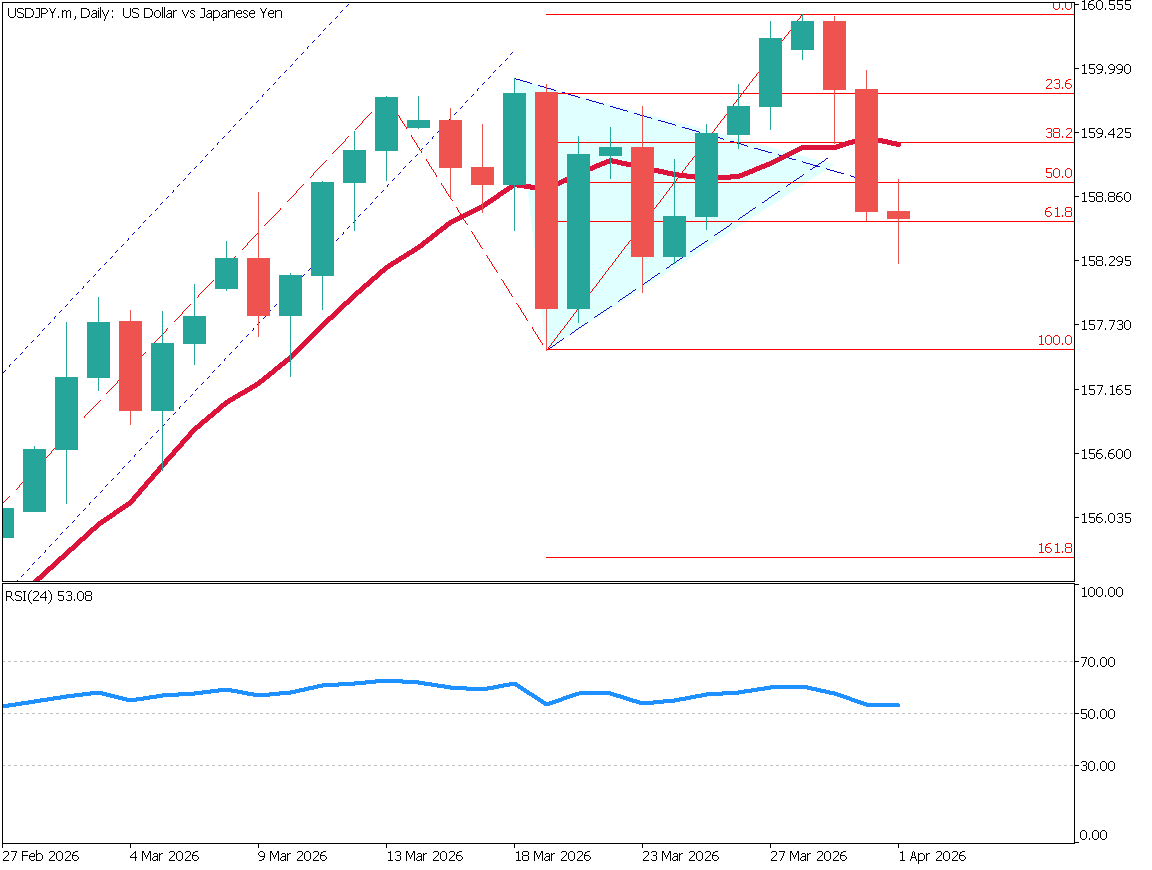
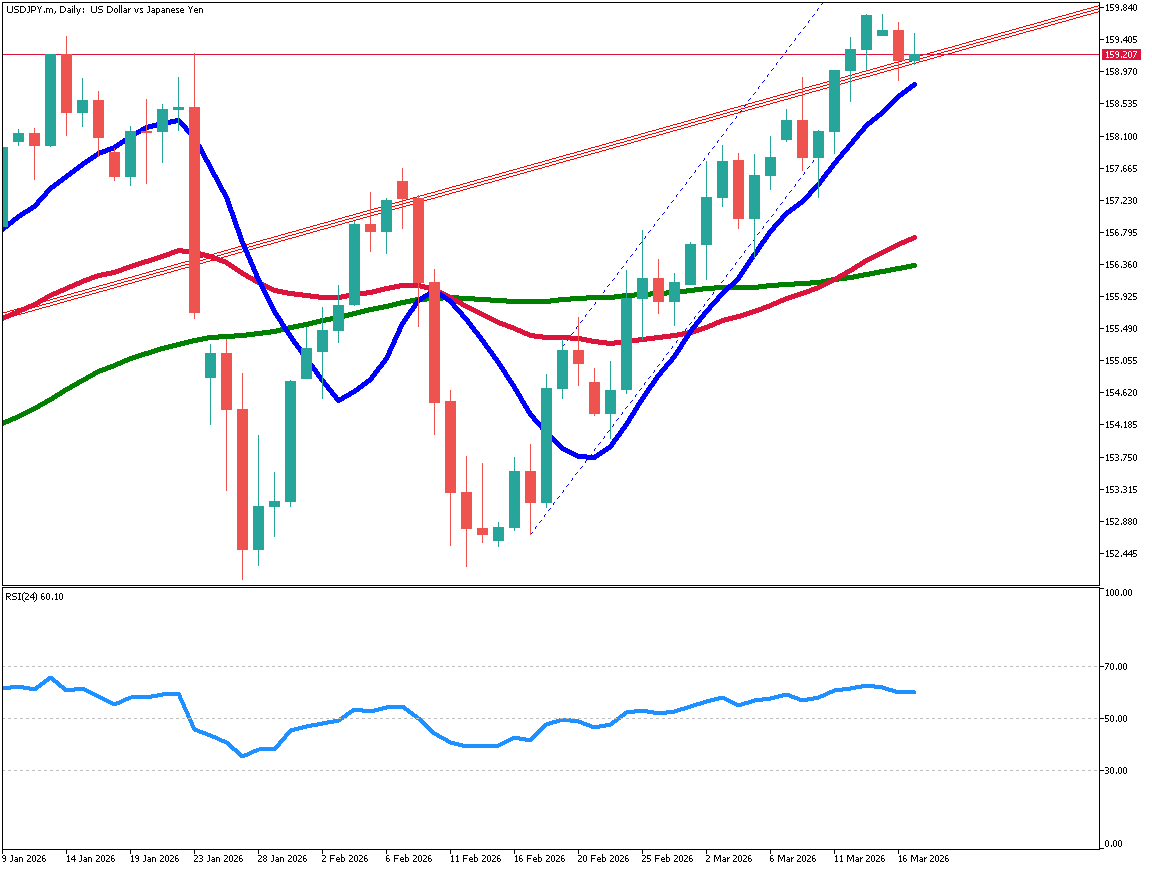
Looking at the daily USD/JPY chart with Fibonacci retracement, the price has rebounded at the 61.8% level. The pair retraced a five-day upward move in just two trading days. Multiple bearish signals have appeared, including an evening star pattern and bearish engulfing formations near recent highs.
If the 61.8% level is broken on a closing basis, a decline toward the mid-157 range should be considered. A break below recent lows would confirm a downtrend, strengthening corrective pressure. If Middle East tensions continue to ease, USD weakness combined with BOJ rate hike expectations could further support yen appreciation.
While the medium- to long-term outlook remains yen-weak, caution is required for short-term fluctuations.
There is also a possibility of a decline toward the key April level of XX yen.
USD/JPY Selling Pressure Pausing?
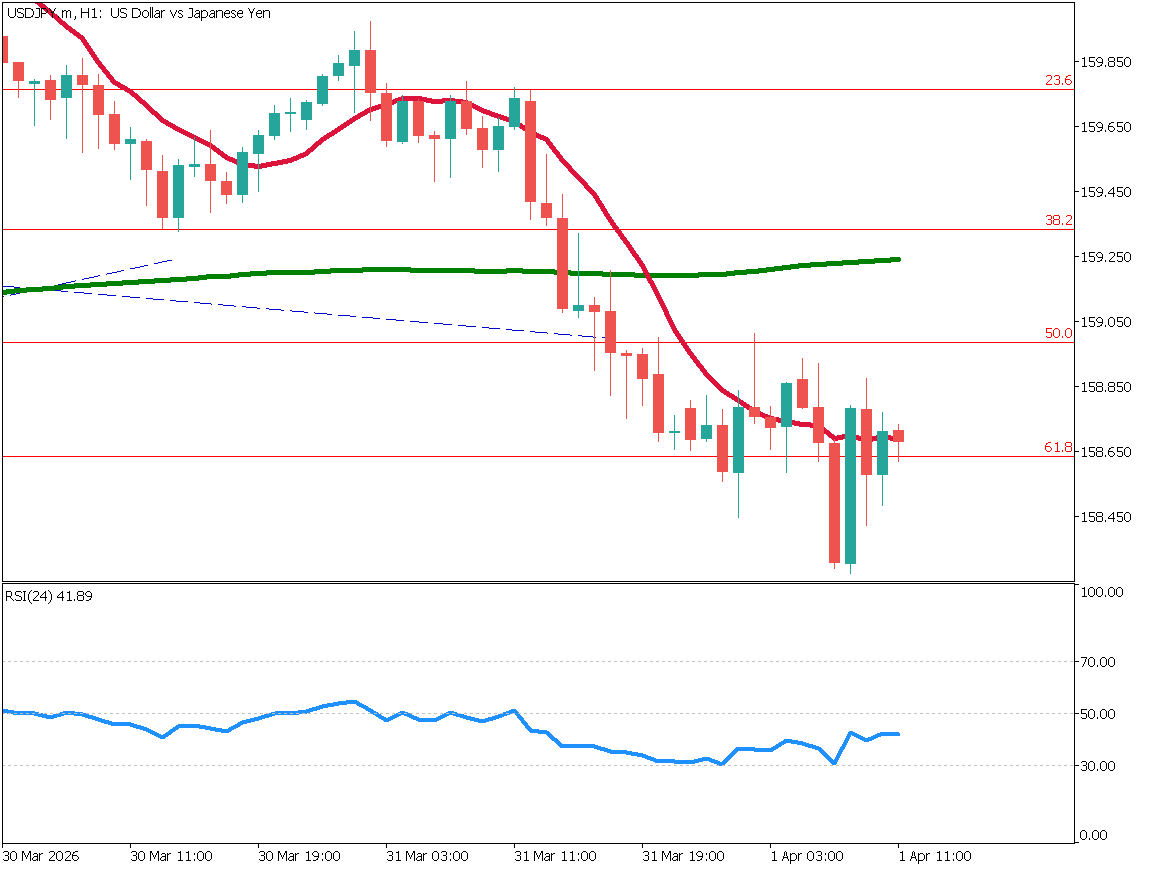
On the hourly chart, the pair dropped to around 158.35 before rebounding sharply. A bullish engulfing pattern has appeared near the lows, and the price has recovered to the 61.8% Fibonacci level on the daily chart. RSI dropped to around 30 and has since rebounded, showing gradual upward momentum.
Moving averages are flattening, suggesting a possible transition to consolidation or an uptrend.
If moving averages act as support going forward, a return to the 159 range is possible. The 200-period moving average on the hourly chart is also a key level to watch. With the U.S. employment report scheduled this week, market movement may become subdued from tomorrow onward.
Ready to trade?
Open live accountRelated Analysis
This material is for informational purposes only and does not constitute investment advice. Trading leveraged products involves significant risk of loss. Past performance is not indicative of future results.