
Dollar Buying Eases After Iran Ceasefire Agreement, USD/JPY May Fall Toward the Low 157 Range

Daily Market Analysis
Expert analysis of today's market movements and trading opportunities
Daily Market Analysis
Expert analysis of today's market movements and trading opportunities
Fundamental Analysis
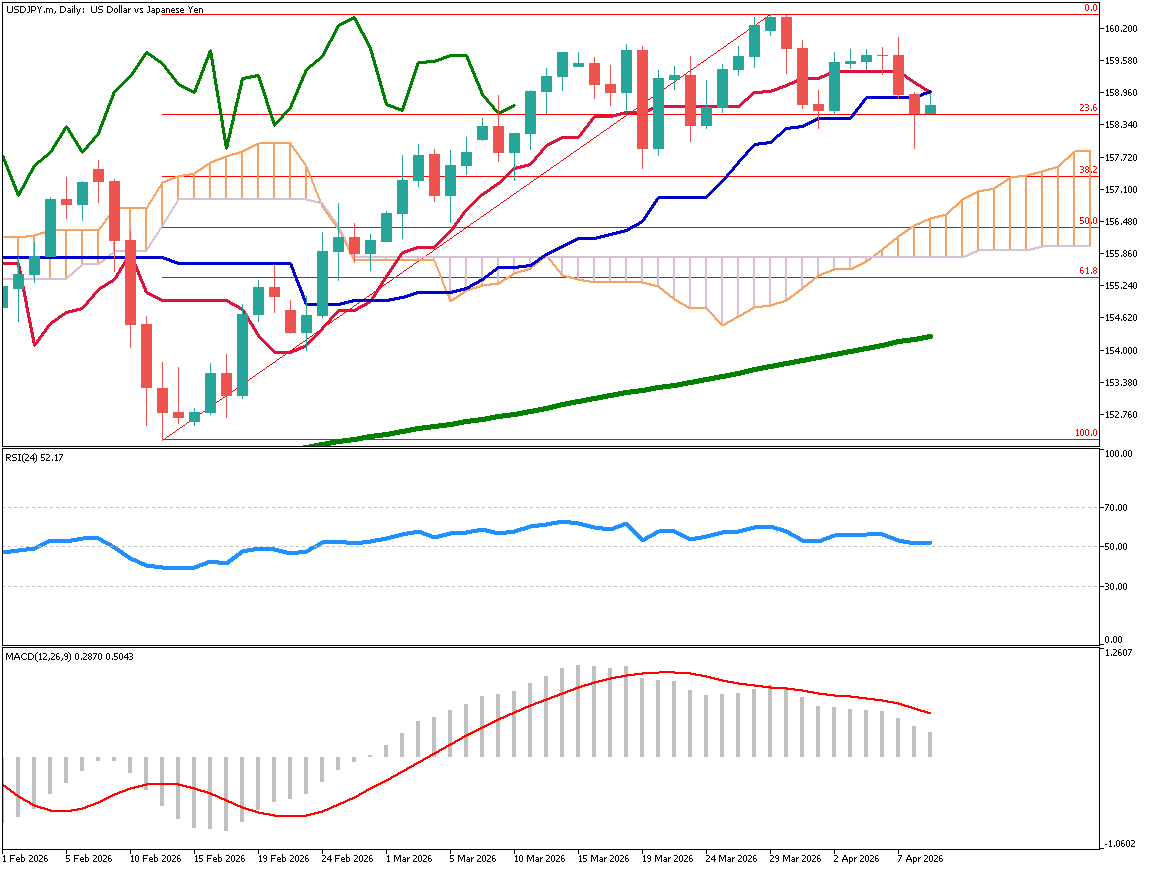
- Following the Iran ceasefire agreement, oil prices dropped sharply and dollar buying eased. USD/JPY fell from near 160 to the mid-158 range. Technically, the Fibonacci 23.6% level is acting as support, but if it breaks, the next key level is around 157.40. RSI and MACD indicate weakening upward momentum, suggesting a range-bound market for now. Future direction will likely depend on the Bank of Japan’s potential rate hike and developments in the Middle East situation.
Dollar Buying Pauses
Crude oil prices fell sharply from $117 to below $100, trading around $97.4 at the time of writing. As dollar buying eased, USD/JPY declined from near 160 to the mid-158 range.
Although the Iran ceasefire agreement is positive news, the key issue is whether the agreement will be fully respected. Israel claims that its attacks on Lebanon are outside the scope of the agreement and has continued its operations, prompting strong reactions from Iran. As a result, Iran has not reopened the Strait of Hormuz.
From a technical perspective, the Fibonacci retracement level of 23.6% is currently functioning as support. If this level breaks, the 38.2% level near 157.40 could become the next short-term focus.
The RSI is hovering around the 50 level, and whether dip-buying strengthens will be an important factor. The possibility of a rate hike by the Bank of Japan has also been raised, which may explain why the yen is no longer weakening in a one-sided trend.
Looking at the MACD, the histogram is trending downward, suggesting that the upward momentum is losing strength. For now, a range-bound market appears likely.
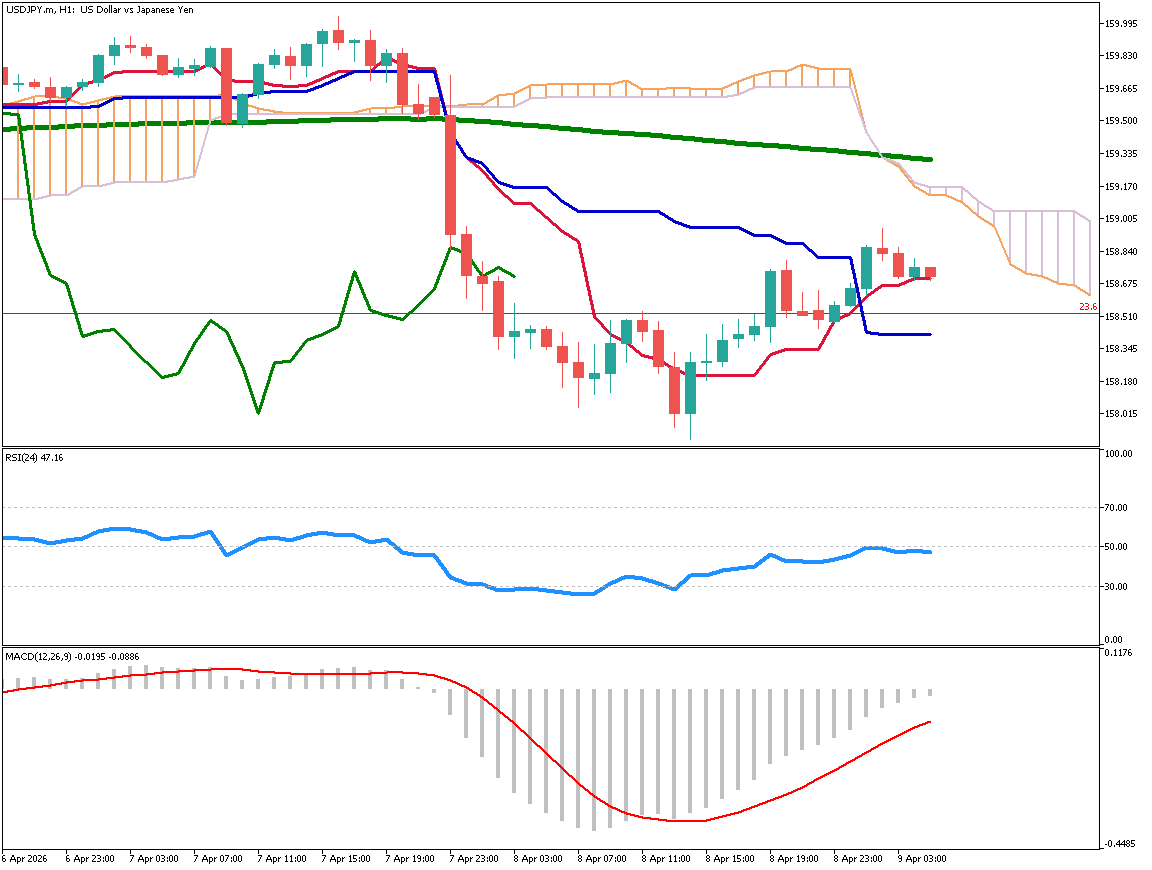
200-Day Moving Average Capping the Upside
The conversion line of the Ichimoku Kinko Hyo is acting as support, indicating a short-term upward bias. The sharp selling toward 158 yen likely triggered a technical rebound.
However, RSI has not moved above 50, and MACD remains below zero. This suggests that selling on rallies could strengthen, requiring cautious judgment.
If tensions between the United States and Iran continue to ease, market attention will shift to the Bank of Japan’s policy meeting. A potential rate hike could push the yen stronger.
However, if fighting intensifies again after the two-week ceasefire period, the trend of higher oil prices, a stronger dollar, and a weaker yen could resume. In this situation, Israel is also involved alongside the United States, and reports indicate that Israel intends to continue military operations.
Traders should prepare for both scenarios and remain flexible in responding to market developments.
Ready to trade?
Open live accountRelated Analysis
This material is for informational purposes only and does not constitute investment advice. Trading leveraged products involves significant risk of loss. Past performance is not indicative of future results.