
USD/JPY continues to rise gradually, with its long-term upward structure unchanged

Daily Market Analysis
Expert analysis of today's market movements and trading opportunities
Daily Market Analysis
Expert analysis of today's market movements and trading opportunities
Fundamental Analysis
- USD/JPY is trading in the high 159 range, maintaining a weak yen trend. The decline in expectations for a Bank of Japan rate hike and rising oil prices are key drivers. In the medium to long term, the pair remains within a 158–160 range, with upside capped by intervention concerns. While the short-term trend is bullish, the 160 level remains a strong resistance. Volatility may increase due to the upcoming BOJ meeting and low liquidity, making a short-term trading approach preferable.
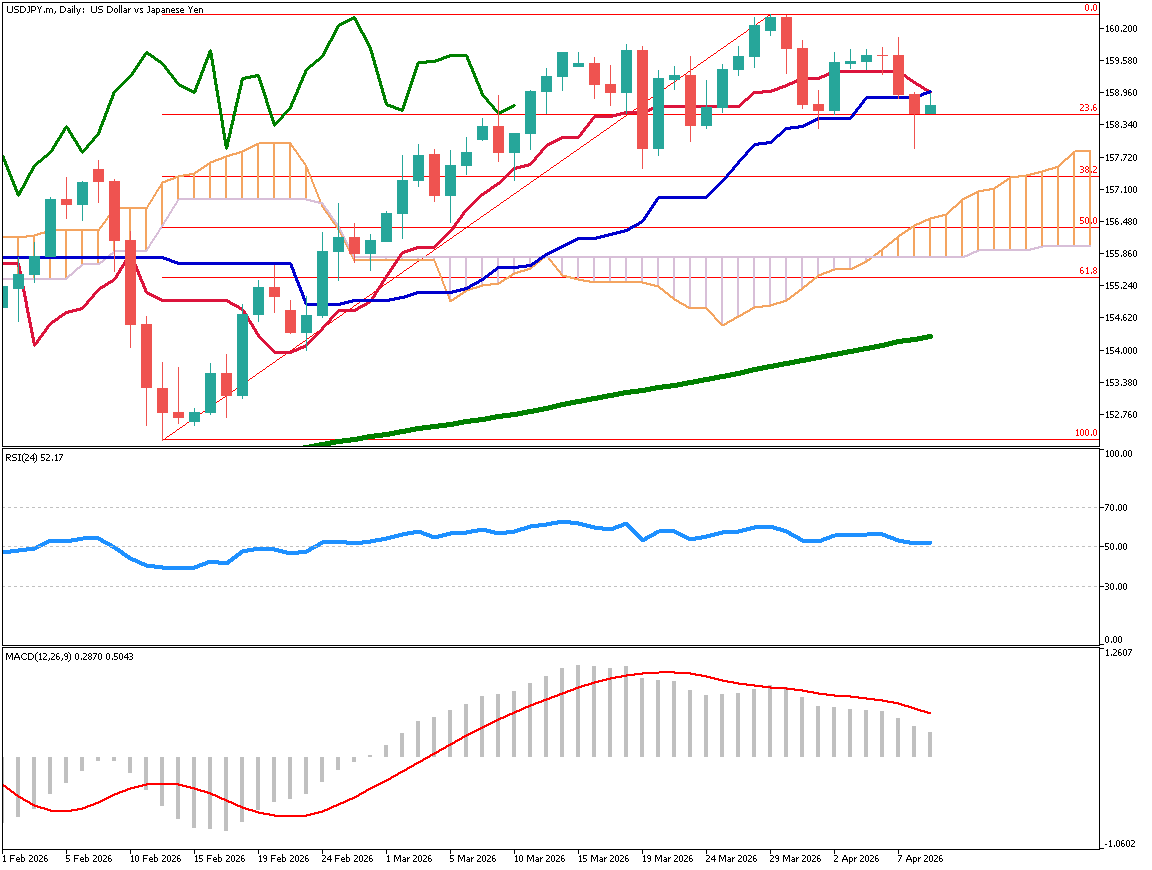
Analyzing the daily chart of USD/JPY, the pair is trading in the high 159 yen range, maintaining a weak yen trend. The retreat in expectations for a BOJ rate hike in April and the renewed rise in oil prices are considered key factors. Oil prices are currently in the $98 range, showing continued volatility.
From a medium- to long-term perspective, USD/JPY remains within a narrow range, fluctuating between 158 and 160 yen. Verbal intervention by authorities appears to be capping the upside.
Upcoming U.S. economic indicators include GDP and the core PCE price index.
Recently, movements in the Nikkei have drawn attention. Even when the index rises, gains are often driven by a few high-priced stocks, while many others decline. As long as disruptions in Middle Eastern oil exports persist, the economic impact is likely to build gradually.
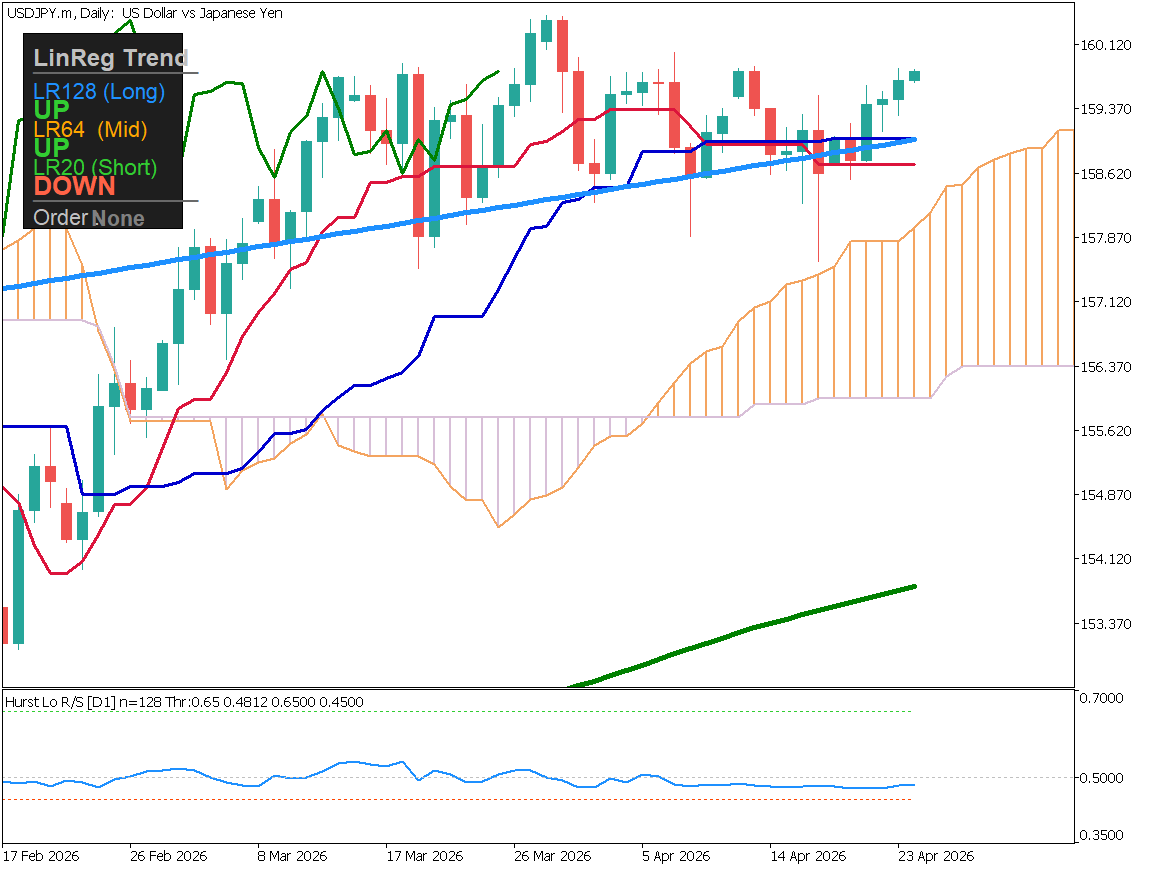
Can it break the 160 yen barrier?
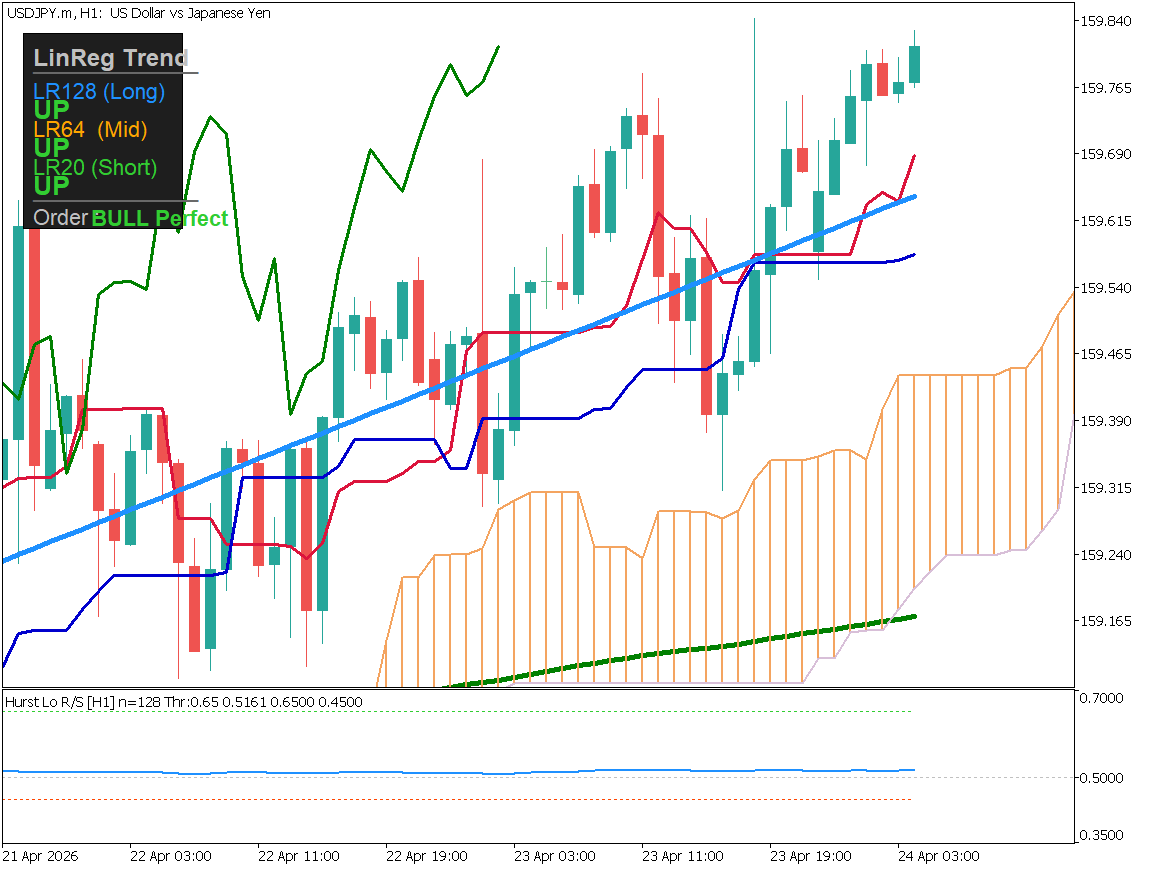
Looking at the hourly chart, the uptrend structure remains intact across short-, medium-, and long-term timeframes. Indicators such as Ichimoku and linear regression also suggest an upward trend. However, the 160 level remains a strong resistance and is difficult to break.
Since early March, the pair has hovered around 160, likely accumulating energy for a breakout. After next week’s BOJ policy meeting, there is a high possibility of significant movement. With the Golden Week approaching, liquidity may decline, potentially leading to increased volatility.
Given the weekend risk, a focus on day trading is recommended for now.
Ready to trade?
Open live accountRelated Analysis
This material is for informational purposes only and does not constitute investment advice. Trading leveraged products involves significant risk of loss. Past performance is not indicative of future results.